 VIMBERIA
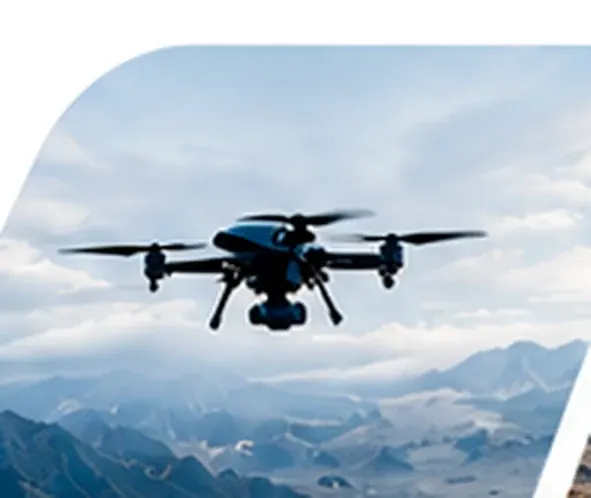
Research and proposed application area. This page does not claim a field-validated commercial product, safety certification or measured performance outside a documented test.
The engineering challenge
An aerial platform must observe moving objects while its own camera changes position, orientation and exposure. Latency, power, bandwidth and imperfect labels can make perception difficult.
Research directions for this sector
Low-latency on-device processing
Study preprocessing, candidate selection, geometry and feature tracking that could reduce compute on embedded hardware without depending on a constant cloud connection.
Camera motion and spatial continuity
Investigate temporally persistent representations, contour correspondences and visual motion estimation as building blocks for localization and autonomy.
Robust imaging in adverse conditions
Evaluate noise and low-light limitations explicitly rather than claiming universal robustness. Assess performance under fast motion, blur and difficult illumination.
Potential integration benefits to evaluate
- Lower bandwidth requirements for on-device decision support
- A research path toward reduced dependence on heavily labeled training data
- Clearer engineering trade-offs between accuracy, power, memory and latency
These are engineering objectives, not guarantees of deployed product performance. Quantitative outcomes depend on validation and integration.
Common technical questions
Can drone perception run without a dedicated GPU?
Some vision pipelines can run on CPU-based embedded boards, but the achievable frame rate depends on image resolution, workload, optimization and hardware. Vimberia is exploring these trade-offs.
Does this provide certified autonomous flight?
No certification or aviation safety performance is claimed. Validation, redundancy and regulatory compliance are system-level responsibilities.
Related technical reading
Explore the technical constraints behind this application:
Discuss a potential proof of concept
Share your platform, sensors, compute budget, deployment environment and validation requirements. Research feasibility should be assessed before making product claims.
Discuss your system →